
A Personal Bathroom Remodel For a Small Carlisle Condo

BEFORE AND AFTER: Sometimes the most meaningful remodeling projects begin not with a trend, but with a person. In this case, Mother Hubbard’s designer elizaBeth Marcocci, CMKBD, reimagined a small, builder-grade bathroom to make it safer, more comfortable and more beautiful for her husband Tim. What had been an uninspired condo bath became a rich, memorable sanctuary tailored to the realities of daily life.
Why This Small Carlisle Condo Bathroom Needed a Remodel
The work of elizaBeth Marcocci is no stranger to the Mother Hubbard’s website. In a previous feature we shared the transformation of her condo kitchen, where thoughtful planning, disciplined editing and artistic vision turned a compact space into an award-winning design. In this bathroom remodel, those same qualities are on full display, but the motivation is even more personal.
When elizaBeth first bought the condo in 2019, she imagined improving the home over time and had already begun making it her own. She transformed one bathroom immediately, making it her personal oasis. In the second bathroom she didn’t do a full remodel, but rather painted one bathroom wall a deep, dramatic purple and replaced the original vanity with a more contemporary floating vanity and updated countertop.

This all changed in 2023 when she was married and Tim moved in. The priorities for the second bathroom became clearer. Tim, a retired veteran, has back issues and physical limitations related to his years of service. For elizaBeth, keeping a bathtub in that room no longer made sense.
Why the Bathtub Was Replaced With a Walk-In Shower
As she tells it, she could picture the problem immediately: Tim was never going to get in that tub. And if he did try, the tub would only create additional risk. Conventional real estate wisdom says every home should have a bathtub, but thoughtful design is not about preparing a house to sell. It is about understanding how a space will actually be used by the people who live there. For Tim, that meant replacing the tub with a shower that would be easier to enter, easier to use and safer over the long term.
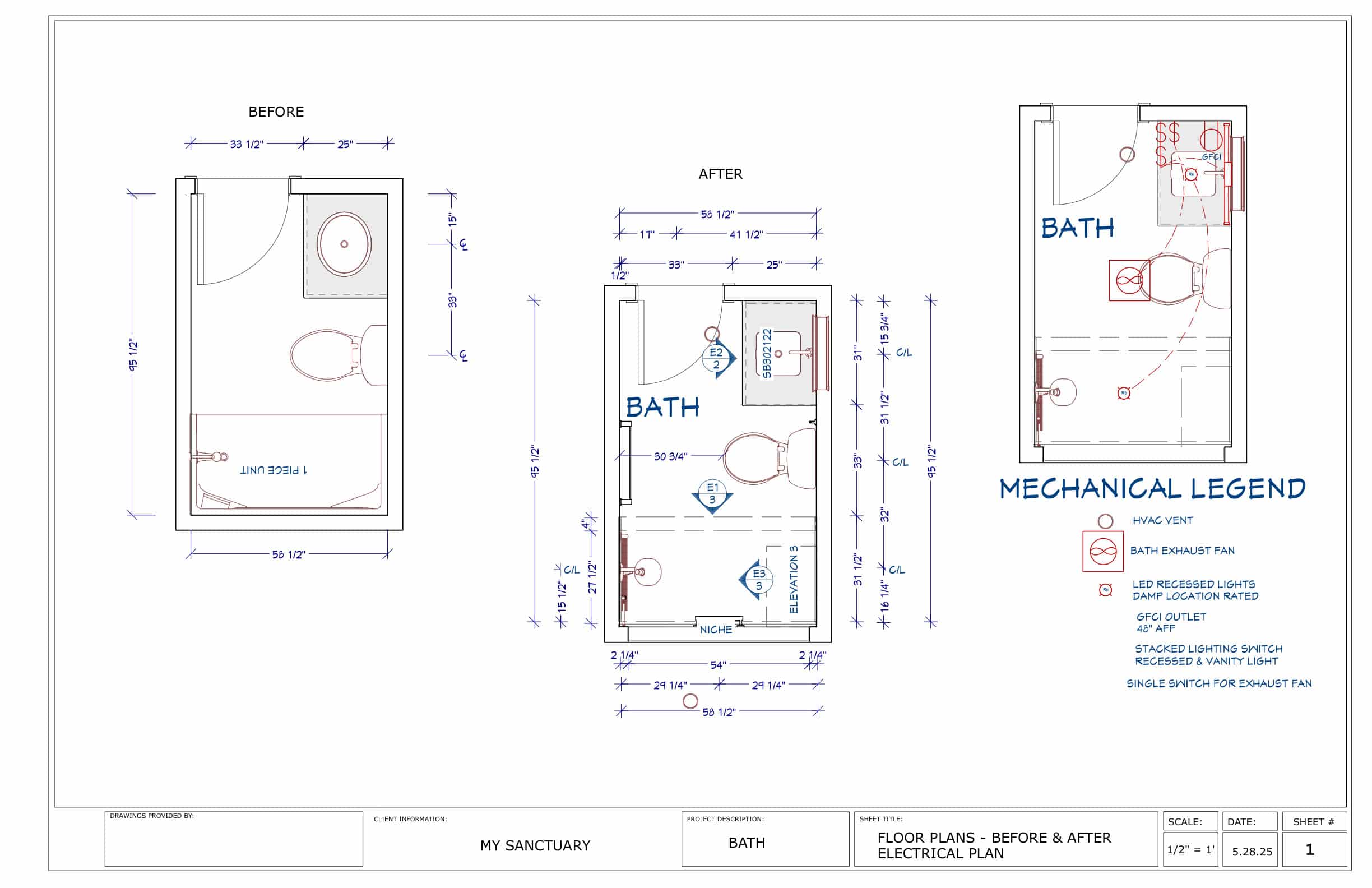
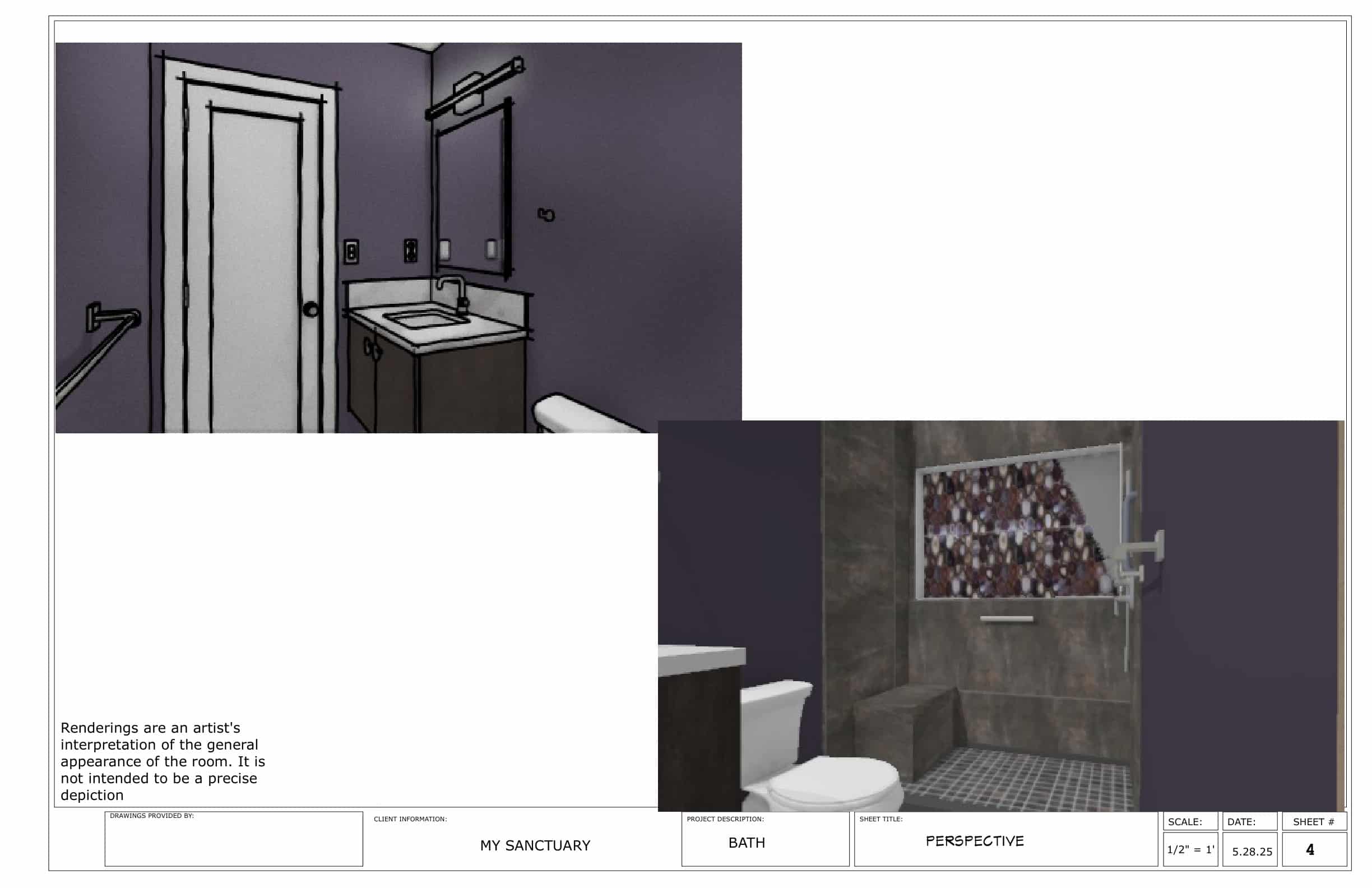
That decision set the project’s direction. elizaBeth started with the functional including a large shower head that allows him to stand and shower, or when in the mood he can sit on the integrated bench seat, utilizing a hand shower for more comfort. To aid Tim’s ability to maneuver into and around the shower, elizaBeth added two balance bars. The first is a vertical bar at the entrance and the second underneath the shampoo niche within easy reach of the bench.
Accessible Bathroom Features for Safety and Comfort
If you’re like most, you probably barely noticed the balance bars because their finish and style not only matches the fixtures elizaBeth chose, but also because they reside so naturally and easily with the gray tile.

Just as importantly, elizaBeth chose not to install a shower door. Because of the bathroom’s tight layout, a door would have created another barrier. She wanted the shower to remain easy to access and, in an emergency, easy to reach into. It was a practical choice rooted in care, and it demonstrates how good design often works quietly in the background, solving problems before they happen.
The Agate Tile Niche That Defines the Design
Of course, elizaBeth was never going to stop at merely making the room functional. While sourcing materials for another project, she came across a striking glass agate tile measuring roughly 18 by 36 inches. The tile immediately captured her imagination. She waited weeks for a sample to become available, and when it finally arrived, she knew she had found the visual centerpiece for the room.
The agate tile brought with it another challenge: it was too beautiful to cut. Rather than force the material to fit a standard layout, elizaBeth adjusted the design to highlight the beauty of the tile. Working with her contractor, she created a custom shower niche sized specifically to receive the full tile. The result is the kind of move that separates thoughtful design from ordinary remodeling. Instead of becoming one more decorative accent, the agate becomes the focal point of the entire shower wall, framed and preserved exactly as intended.

Dark Colors and Smart Layout Choices in a Small Bathroom

Around that feature, elizaBeth layered a softer gray tile that complements the jewel-like richness of the agate and works naturally with the deep purple she had already introduced into the room. The palette is bold, moody and sophisticated. It also reflects something she feels strongly about: dark colors do not automatically make a small room feel smaller. In fact, when used with confidence, darker tones can shift the perception of a narrow room, add depth and make the space feel more intentional and enveloping.
That idea shows up elsewhere in the remodel too. The floating vanity helps open the floor visually, giving the room a lighter, less crowded feeling. The shower niche itself adds function while also creating extra elbow room. Even in a modest footprint, every choice contributes to the spectacular experience of the room. Nothing feels random, and nothing feels overdone.
A Bathroom Remodel That Balances Beauty and Function
What makes this bathroom especially compelling is that it was not transformed through square footage or structural heroics. The room did not need to be made bigger to become better. Instead, it benefited from a designer, elizaBeth, who understood the emotional and practical needs of the loved one using it. Tim needed comfort, ease and safety. elizaBeth wanted beauty, character and a room that did not look like every other builder-grade condo bath. The finished space delivers both.
As with her kitchen, elizaBeth’s bathroom remodel reflects years of observation, intuition and lived design experience. She trusted her instincts and experience with color, material and proportion, but she never lost sight of the project’s real purpose. This was not a showroom exercise. It was an act of care expressed through design.
In the end, the bathroom became exactly what it needed to be: a personal sanctuary for Tim, a vivid example of accessibility without compromise, and another reminder that the best remodeling projects are the ones that solve real problems beautifully.